
Javier Milei stepped up to the United Nations rostrum to explain, in distinctly undiplomatic language, that the United Nations is of very little use.
There is something remarkable about the scene.
Criticising the UN from a public square is protest. Doing so from the General Assembly hall, before its delegations, interpreters, officials and elaborate diplomatic machinery, amounts to borrowing the institution’s loudspeaker to announce that the loudspeaker no longer works.
Milei described the organisation as “useless” and attacked what he portrayed as a bureaucratic caste living comfortably behind noble intentions. He criticised its record on dictatorships, terrorism, the pandemic and international policy agendas. But one issue occupied a particularly important place in his address: the Falkland Islands, known in Argentina as the Malvinas.
And that is where the speech became considerably more interesting.
The Argentine president did not announce Argentina’s withdrawal from the United Nations. Nor did he reject multilateral diplomacy altogether. Argentina, he said, would continue participating in international forums while refusing to confuse cooperation with subordination.
Yet in defending Argentina’s sovereignty claim, Milei appealed precisely to the authority whose weakness he had just denounced: international institutions, their resolutions and the principle that their words should eventually have consequences.
That is not necessarily a contradiction.
It can also be understood as a more uncomfortable accusation: Milei was not merely challenging what the United Nations says. He was questioning the distance between what it says and what it is capable of making happen.
The Falklands/Malvinas dispute provides an unusually clear laboratory for that argument.
Argentina maintains its sovereignty claim. Britain rejects it and upholds the islanders’ right to self-determination. The United Nations has for decades recognised the existence of a sovereignty dispute and called for a negotiated settlement. Yet the dispute remains unresolved.
The diplomatic architecture exists.
The solution does not.
This is precisely where Milei placed his finger.
If an international institution adopts resolutions for decades without succeeding in changing the conduct of the parties involved, it is reasonable to ask what practical weight its authority carries. That question remains legitimate even if the answer is considerably more complicated than insulting the people working inside the building.
The United Nations, after all, was never designed as a world government.
It can pass resolutions, provide diplomatic forums, organise international action and exert political pressure. But it remains an organisation of sovereign states pursuing their own interests. Whenever powerful countries are involved, the distance between international law, diplomacy and power becomes particularly visible.
The Falklands/Malvinas dispute has demonstrated that distance for generations.
Milei added another ingredient. Argentina, he said, had chosen a peaceful, practical and effective defence of its position. He again called on Britain to resume negotiations, while warning that Buenos Aires would not simply sit and wait for the United Nations to act.
Those words deserve attention.
Argentina has already begun turning rhetoric into domestic policy. During September, the government initiated proceedings involving companies and individuals linked to hydrocarbon activities around the islands and sent Congress a broader National Sovereignty Defence bill. Whether those measures prove effective is another question; their existence, however, gives political meaning to Milei’s declaration that Argentina intends to act.
And when such language is spoken from the United Nations rostrum, verbs matter.
The speech ranged far beyond the South Atlantic. Milei reaffirmed Argentina’s alignment with the United States and Israel, attacked international policy agendas he considers interventionist and presented Artificial Intelligence as an extraordinary technological and economic opportunity that should not be suffocated by preventive regulation.
It was a considerable amount of luggage for one address.
Yet the Falklands/Malvinas dispute ultimately provided the thread connecting much of it.
National sovereignty against multilateral institutions. Authority against bureaucracy. Resolutions against facts. Cooperation against subordination.
And above all, one question extending far beyond Javier Milei and Argentina:
What is an international institution for when its words can no longer influence the reality it was created to address?
The easy answer is to say that it is useless.
The more uncomfortable answer is to consider what remains when even that table disappears.
The United Nations can be slow, contradictory, bureaucratic and painfully powerless before certain conflicts. It is also one of the very few places where almost every state on Earth can sit beneath the same roof and tell the others — sometimes brutally — precisely where they disagree.
And therein lies the small irony of the day.
Milei travelled to New York to tell the United Nations that it had lost its authority.
The United Nations provided the rostrum, microphones, interpreters and worldwide audience from which he could say so.
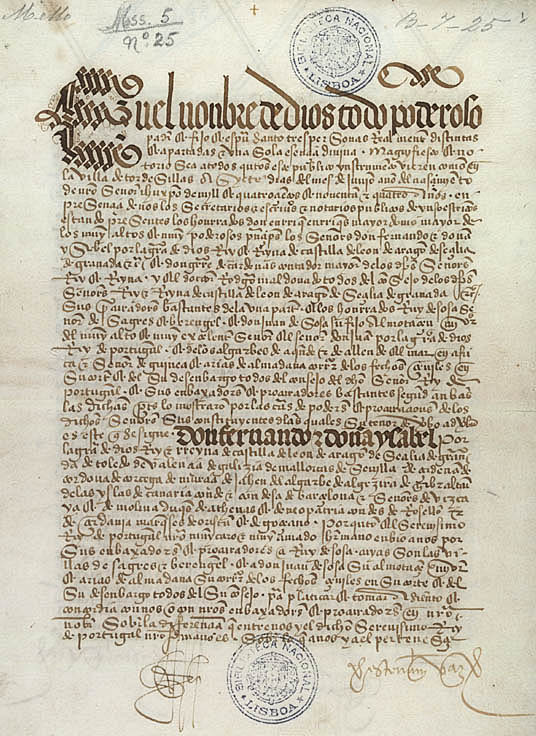
And from that same rostrum, Argentina’s president demanded that one of the disputes discussed within the organisation for generations finally cease to be merely another collection of carefully archived papers.
Perhaps the most important word in Milei’s speech was not “parasites”.
Perhaps it was something much less spectacular:
consequences.
Because international institutions, governments and newspapers alike can survive an unfortunate phrase.
What rarely survives indefinitely is a word that nobody takes seriously.
🖋️ © El Notario de las Contradicciones | 2026 — All Rights Reserved
© 2026 SalaStampa.eu, world press service – All Rights Reserved – Guzzo Photos & Graphic Publications – Registro Editori e Stampatori n. 1441 Turin, Italy